Hi~welcome to shenzhen xinmu display technology co., ltd.!

News Center

hotline:

13632760729

LED splicing screen control secrets are released

2025-08-11 155

Alas, friends who are just getting involved in LED large screens, have you stared at the seamlessly spliced huge advertising screens in the mall and stared at the huge advertising screens? I was muttering in my heart: "How do you control this thing? Could it be that there is a dedicated person squatting behind and pressing the switch 24 hours a day? " Today we will lift up this mysterious veil, so that you can talk to experts after reading it.


1. Where is the "brain" of the control system hidden?

Let me tell you a little bit about it first - every LED splicing screen you see is a "smart housekeeper group" hidden behind it. This team consists of three core members:

LED拼接屏控制秘籍大公开

​• Send card:​​ It is equivalent to the command center, responsible for translating computer signals into languages that LED screens can understand.
​• Receive card:​​ Just like a messenger, you can accurately assign instructions to each box module
​• Control software:​​ This is the real big shot behind the scenes. It depends on it to adjust brightness, color, and play content.

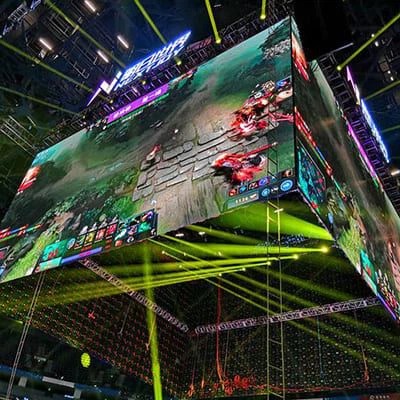
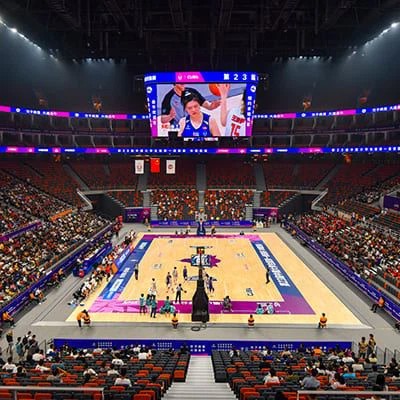
To give a real case, the 800-square-meter circular screen at an international sports event is a coordinated combat with 36 sending cards and 576 receiving cards. During the competition, the temperature on the spot soared to 45℃. This system was as stable as an old dog, with zero failures for 18 consecutive hours - all this is real kung fu.


2. The installation environment is a hurdle

"Can I install LED screens in my basement? "A restaurant owner asked me this last week. Let's look at the group data first:

​Ideal environment parameters​

  • Temperature: -20℃~50℃ (automatic protection may be triggered after out of range)
  • Humidity: 10%~90% non-condensing
  • Power supply fluctuations: ≤±5%

Last year, the moisture-proof screens installed in a restaurant in a Southeast Asia were particularly particular. The sea breeze blows every day, and the humidity is 90%+ at any time. We have done three-proof treatment for each splicing box, and a dehumidification module is also plugged into the control cabinet. It has been two years since the screen is still bright.


3. Debugging parameters are technical

It is easiest for beginners to fall in parameter settings. Remember these three golden rules:

​1. Don't pull the brightness up​
The indoor screen is just right to 800-1200cd/m², and the outdoor screen should not exceed 5000cd/m² during broad daylight. I have seen a shopping mall that has switched the screen to 8000cd/m², but passers-by have to cover their eyes when they pass by - don’t you ask for a complaint!

​2. The refresh rate must be strong enough​
Less than 1920Hz? Stop using it! The scan line appears when the phone is shot. The floor tiled screen we made for the concert has 3840Hz refresh rate + intelligent brightness adjustment. When the singer dances, the audience takes photos on their mobile phones, and every one is full of high-definition blockbusters.

​3. The color calibration is more serious​
Does the red, green and blue color deviation exceed 5%? That shows that the face is definitely blue! A customer insisted on adjusting the colors themselves, but the orange on the large screen looked like a lemon, and in the end, our technology brought the spectrometer to the door to save.


4. Hidden skills for daily maintenance

Let me tell you a secret that only the industry knows: 90% of the faults are caused by loose wiring! Remember to do these three things every month:

  1. Open the control cabinet and blow up dust (remember to turn off the power first)
  2. Re-plug and unplug each signal cable
  3. Check whether the cooling fan is rotating smoothly

There is a case of a supermarket chain that is particularly typical. After their 18 advertising screens are routinely maintained every month, the failure rate has dropped from 35% to 3% - this is much more cost-effective than replacing a new screen, right?


Personal opinion time

I have to say that choosing an LED splicing screen is like finding a partner. Just looking at the appearance (display effect) is not enough, but also looking at the "temperature and personality" (control system stability). I have seen too many cases of losing money by greed for cheapness. A bar owner bought a second-hand control system in order to save money. As a result, the big screen suddenly flashed during Halloween event - it was really true!

So remember, a reliable after-sales team is more important than anything else. Just like the 24-hour response mechanism we have made for customers, the control system was exhausted at 2 a.m. in a shopping mall in Tokyo last time, and the technical guy guided the duty staff to do it in 15 minutes - this is the real essence of "control"!

for more product information and pricing, please contact us .

Shenzhen New Screen Display Technology Co.Ltd